.png)
ENERGY STORAGE · SYSTEM INTEGRATION
STORAGE AS THE CONNECTOR
By David Swank, CEO, i3 Power & Energy
If you want a concrete illustration of what the coordination model actually produces, look at how energy storage gets treated in the two theories of infrastructure development. In the traditional model, storage is an asset. A developer buys it, sizes it, installs it, and hopes to earn back the investment through a combination of revenue streams that were negotiated separately with different counterparties. In the coordination model, storage is not primarily an asset. It is a connector. Its value depends on what it lets happen between the parties around it, and that value only emerges when those parties are actually at the table together.
This is one of the areas where the difference between the two models shows up most cleanly and most measurably. Storage is expensive enough, and its value proposition is complex enough, that the design and contracting choices made around it produce very different economic outcomes for what looks like the same physical asset. Understanding the difference is one of the fastest ways to see what integrated development is actually about.
WHAT STORAGE SITS BETWEEN
A storage asset sits at the intersection of nearly every meaningful boundary in the grid. Generation on one side, load on the other. Wholesale market participation on one side, retail customer service on the other. Utility distribution planning on one side, system operator dispatch on the other. Present operating conditions on one side, future grid states on the other. Every one of those boundaries is a place where value can be created, and the value can only be captured if the parties on both sides of the boundary are participating in the design and operation of the asset.
This is why storage is such a useful teaching case. It is not that storage requires coordination while other assets do not. It is that storage makes the value of coordination visible in a way that other assets do not.
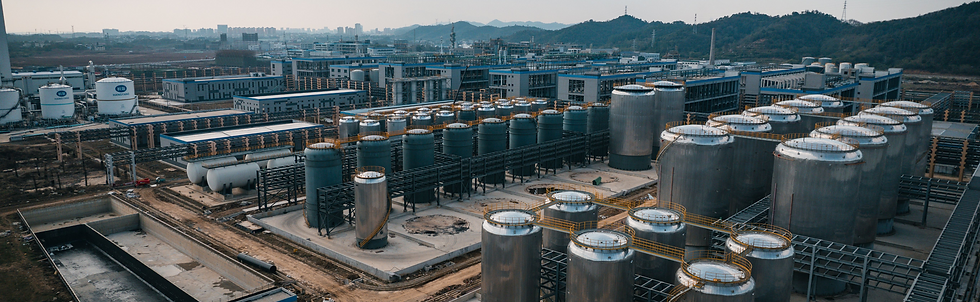.png)
WHY STANDALONE STORAGE UNDERPERFORMS ITS POTENTIAL
Storage that gets developed as a standalone asset almost always underperforms what the same asset could deliver in a coordinated context. It gets sized for one revenue stream at a time. It gets optimized for one counterparty at a time. It rarely captures the full portfolio of value streams the site could actually access, because the developer negotiated with each counterparty in isolation and could not commit to serving all of them simultaneously.
This is not a limitation of the technology. Modern storage systems are capable of stacking multiple value streams and serving multiple counterparties within their operational envelope. The limitation is the deal structure that developed the asset. A single counterparty on the contract produces a single-purpose battery. Multiple parties at the table produce something much more valuable.
“A storage asset with a single counterparty is a battery. A storage asset with every party at the table is a strategic reserve.”
.png)
WHAT COORDINATED STORAGE LOOKS LIKE
A storage asset developed under the coordination model is sized against the full set of value streams the site can access, not just the one that is easiest to contract first. It is contracted so that multiple parties benefit and multiple parties have visibility into how it operates. It is dispatched as a portfolio-level resource that responds to grid conditions, market signals, and load requirements simultaneously rather than serving one at a time.
The result is an asset whose economics look substantially different from a standalone battery. Higher effective utilization. More stable revenue. Better integration with the surrounding grid. Lower risk profile from the perspective of the parties who depend on it. These are not marginal differences. They are often the difference between a project that returns cost of capital and one that does not.
WHY THIS IS THE FRAMEWORK IN MINIATURE
The intelligence layer of the i3 framework determines where the storage should be placed based on grid conditions, congestion patterns, and site economics. The integration layer determines how the storage interacts with generation, load, and controls on site. The interoperability layer determines how the storage participates in flexible interconnection, grid services, and market activity. All three layers converge on the storage decision, and if you understand how they converge, you understand what integrated development
actually delivers.
This is why we often use storage as the entry point when we walk potential partners through how i3 works. A single storage decision touches every party in the coordination model. The developer, the utility, the operator, the market participant, the community host. Getting the storage right requires getting all of them into the room. Getting it wrong is a symptom of not having them there.
.png)
THE ASSET THAT SHOWS THE MODEL
Storage is not just a component of an integrated system. It is the clearest single asset for illustrating what integration actually means. The developer who sizes storage in isolation gets a battery. The developer who convenes generation, load, utility, and market participants around the sizing decision gets an asset that produces value nobody around the table could have produced alone. That is what the coordination model is for. Storage is where it shows up most cleanly, most measurably, and most quickly. If you want to see i3's framework at work, look at the storage decision on any project we develop. That decision is the whole system, compressed into one asset.